The rent can be cheap and the pay still too low
Staff Housing: The NMW Offset Is £11.10 a Day
A cheap staff flat can still leave a worker underpaid. Consider a live-in pub manager aged 21 or over who earns the April 2026 National Living Wage of £12.71 an hour and pays £120 a week for accommodation. The rent exceeds the weekly accommodation offset by £42.30. That excess reduces the pay counted towards minimum wage and leaves this worker below the legal rate, even if the flat would cost much more on the open market.
The accommodation offset is the only allowance for a benefit in kind in the minimum-wage calculation. The operator needs to check the charge, the worker's hours and the applicable wage rate for each pay period.
The offset rate
From April 2026, the accommodation offset is £11.10 per day (£77.70 per week).
Charges at or below the offset do not reduce the pay counted towards minimum wage. Charges above it reduce counted pay by the excess. If the accommodation is free, the offset is added to counted pay.
The rates since 2024 are:
| Year | Daily rate | Weekly rate |
|---|---|---|
| 2026 | £11.10 | £77.70 |
| 2025 | £10.66 | £74.62 |
| 2024 | £9.99 | £69.93 |
The rate changes every April. The government announces the new figure before it takes effect. Check accommodation charges against the new offset and wage rates before applying them in April.
How the calculation works
These examples assume accommodation is available for all seven days of the week.
Charge below the offset. A hotel charges kitchen staff £60 a week for a shared house. The offset is £77.70. The charge is below the offset, so there is no impact on NMW calculations. The worker's pay stands as it is.
Charge above the offset. A pub charges its live-in manager £120 a week. The offset is £77.70. The difference, £42.30, is treated as a deduction from pay for NMW purposes. For a worker aged 21 or over, that deduction must not take the effective rate below £12.71 at April 2026 rates. It does not matter that £120 a week is below market rent for the area.
Accommodation provided free. The full offset, £77.70 per week, is added to the worker's pay for NMW purposes. Free accommodation works in the employer's favour.
The accommodation charge includes rent, gas, electricity, furniture and laundry. A charge of £77.70 for the room with a separate £30 for electricity on top would be treated as a single accommodation charge of £107.70 and measured against the offset in full.
Check each worker
These worked examples use April 2026 rates for workers aged 21 or over, seven days of accommodation and no other minimum-wage adjustments:
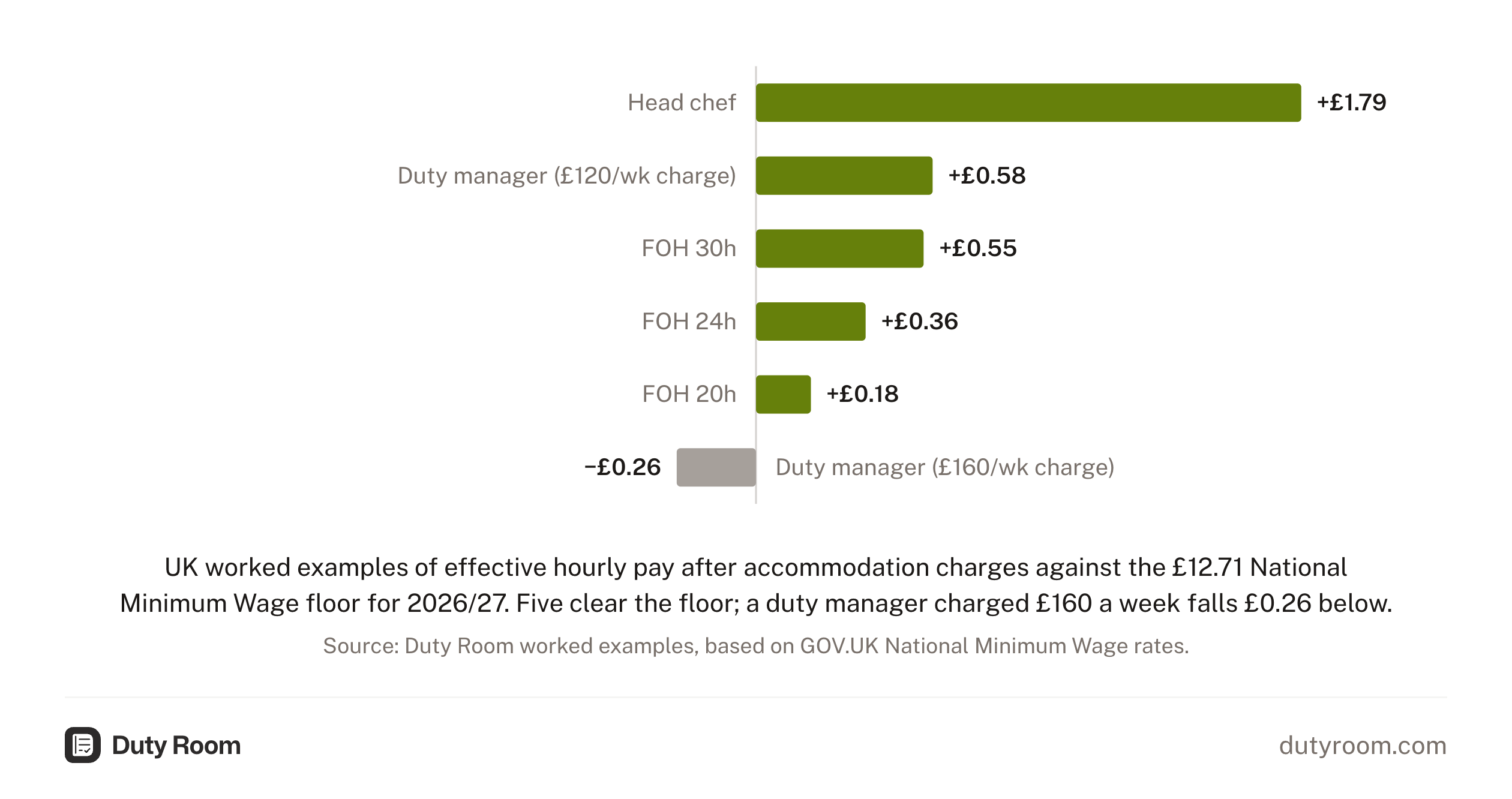
| Role | Weekly hours | Weekly gross pay | Accommodation charge | Excess over offset | Effective hourly rate | Compliant? |
|---|---|---|---|---|---|---|
| Head chef | 40 | £580.00 | £77.70 | £0.00 | £14.50 | Yes |
| Duty manager | 48 | £680.00 | £120.00 | £42.30 | £13.29 | Yes |
| Duty manager | 48 | £680.00 | £160.00 | £82.30 | £12.45 | No |
| FOH (variable) | 30 | £420.00 | £100.00 | £22.30 | £13.26 | Yes |
| FOH (variable) | 24 | £336.00 | £100.00 | £22.30 | £13.07 | Yes |
| FOH (variable) | 20 | £280.00 | £100.00 | £22.30 | £12.89 | Yes |
The FOH rows illustrate the variable-hours exposure: the same £100 weekly charge is compliant at 24 hours and becomes non-compliant once weekly hours drop to around 17. A minimum-hours floor of 20 leaves a buffer of nearly three hours at that charge level.
Calculate it per pay reference period
The offset is calculated per pay reference period, not annually. A monthly-paid manager has a monthly pay reference period. A weekly-paid kitchen porter has a weekly one.
If hours vary between periods (and in hospitality, they often do), the same accommodation charge can be compliant in a busy month and non-compliant in a quiet one. Fewer hours means the accommodation deduction has a larger per-hour impact.
A manager who works 50 hours a week during December and 35 hours a week in January pays the same rent both months. The NMW impact is different in each period. Check both busy and quiet periods before setting a charge for staff whose hours vary.
Records
The NMW Regulations require employers to keep records sufficient to show that each worker received at least the minimum wage in every pay reference period. The records that show this in practice are:
- The accommodation charge, broken down if it includes utilities or other costs
- The offset rate applied (which changes annually)
- Hours worked in each pay reference period
- The resulting effective hourly rate after the offset calculation
Minimum-wage records have a six-year retention period, counted from the end of the pay reference period following the one they cover. A separate six-year limit applies to the periods a notice of underpayment can reach. From 7 April 2026, legal responsibility for NMW enforcement sits with the Fair Work Agency. HMRC operates the notice-of-underpayment process on its behalf. The record-keeping obligation is unchanged.
In proceedings to recover minimum-wage arrears, section 28 of the National Minimum Wage Act presumes underpayment unless the employer proves otherwise. Missing records can prevent the employer from showing what it paid and how it calculated the amount.
Correcting historical shortfalls
Recalculate every affected pay reference period using its actual hours, accommodation charge, offset and minimum-wage rate. Start where the error began; a change in rent or working hours can create a shortfall even when the April rates were applied correctly.
Arrears may exceed the original cash shortfall. Section 17 of the National Minimum Wage Act requires an uplift where the current-rate calculation produces more than the original underpayment. Keep a schedule for each worker showing the calculation, the amount repaid and the payment date.
The Fair Work Agency's enforcement policy says officers should ordinarily refrain from issuing a notice of underpayment if the employer correctly repaid all arrears, including any uplift, before the investigation began. A notice can require a penalty and generally leads to referral for public naming. Check that every affected worker has received the full amount due; recording an intention to correct payroll is not repayment.
Review the charge when pay or hours change
Meals, transport and other benefits do not count as pay towards minimum wage. Charges or deductions for them can still reduce the pay that counts, so keep them in the payroll review.
For each live-in worker:
- Check the new offset and wage rates before they take effect in April.
- Recalculate when the accommodation charge or working hours change.
- Keep the written arrangement, charges and calculations together.
- Explain any change in the accommodation charge to the worker before applying it.
A rent that works for one worker or pay period may underpay another. The calculation needs the actual hours and charges, not an estimate of the flat's value. Our employment records resources cover the other payroll checks that sit alongside it.
This briefing is based on sources available at publication and is for general information only. It doesn't constitute legal advice. For advice on your specific situation, consult a qualified professional.
Produce the record when you're asked, not a week later.
The average NMW penalty is £5,545 and the naming rounds are public. Duty Room keeps right to work, working time, and tipping records current per site.