Catch the breach during service, then record the response
AGCO Cases Show How Service Failures Put Licences at Risk
A bar's liquor licence depends on what staff allow during service. Overcrowding, permitted drunkenness and drinks left after the service period appear repeatedly in published decisions from the Alcohol and Gaming Commission of Ontario (AGCO). These cases show why a manager needs to catch the breach while it is happening, then keep a record of the action taken.
A suspension can stop alcohol sales for weeks; revocation removes the licence. In the AGCO's quarterly decision summaries from Q1 2017 to Q3 2021, 40 of 52 cases ended in suspension and 12 in revocation. The suspensions lasted 14 to 90 days. Those historical decisions cannot predict the outcome of a future inspection, but they identify failures worth checking on every shift.
The cases concern conditions staff can see
Overcrowding appears in 16 of the 52 published decisions, permitted drunkenness in 14, and failure to clear signs of service in 11. The last category includes drinks and empties left after the permitted service period. A single case can involve several failures.
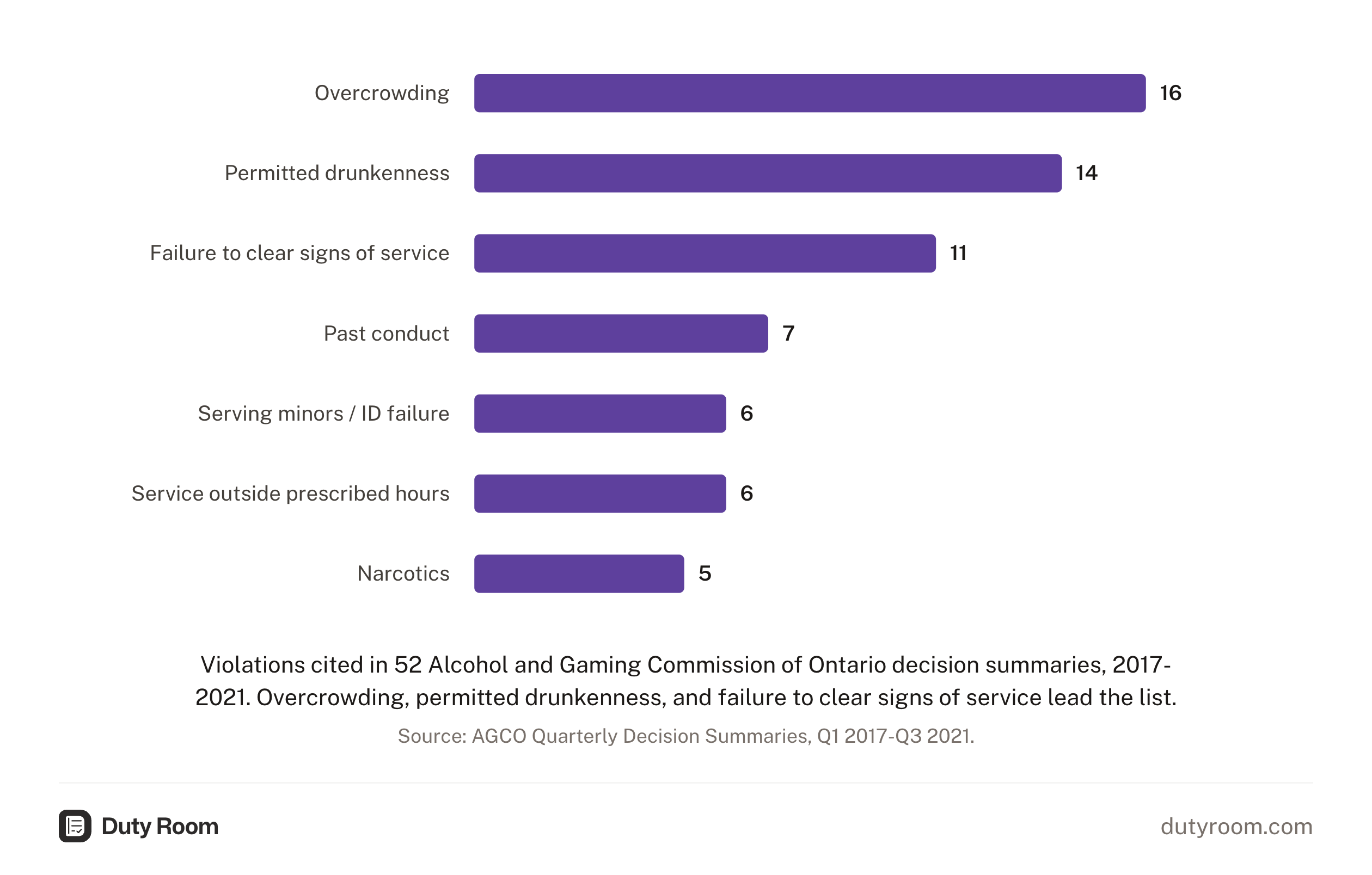
| Violation category | Cases |
|---|---|
| Overcrowding | 16 |
| Permitted drunkenness | 14 |
| Failure to clear signs of service | 11 |
| Past conduct | 7 |
| Serving minors / ID failure | 6 |
| Service outside prescribed hours | 6 |
| Narcotics on premises | 5 |
These findings connect the licence to decisions made during service: how many people staff admit, how they respond to intoxication, and whether they clear drinks when service must end. Written policies help only when someone applies them. The overservice cases show how a service failure can escalate when someone is hurt.
Check the conditions before writing the record
The case categories suggest a practical order for the manager's checks:
- Compare the number of people admitted with the premises' permitted capacity. Act on an excess while customers are still there.
- Check how staff recognise intoxication, stop service and call for help. Record refusals and the action taken.
- Confirm the permitted service times and who checks that drinks and empties have been cleared when required.
- Keep licence conditions and staff training evidence accessible to the manager on duty.
An incident log should describe what happened and what staff did about it. A completed form cannot correct overcrowding or stop overservice; the manager must first deal with the condition.
Our Ontario liquor compliance resources cover the checks and records a manager can use during service.
This briefing is based on sources available at publication and is for general information only. It doesn't constitute legal advice. For advice on your specific situation, consult a qualified professional.
Keep service records within reach
Duty Room keeps licence conditions, Smart Serve expiry dates and refusal logs together for the manager on duty.